Wendy Jung · 24 October 2026
Linking Regional Festival Dates to Fluctuations in Shared Cabin Availability Metrics
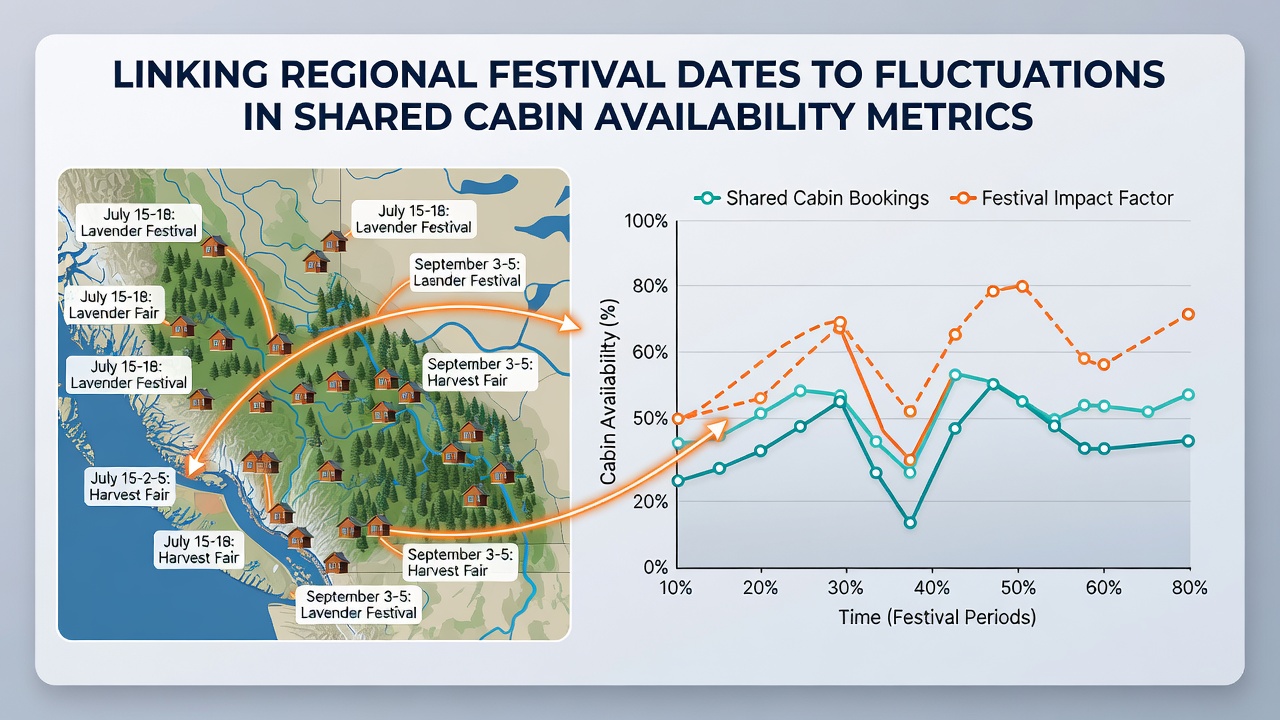
Regional festivals create measurable shifts in shared cabin availability across rural and semi-rural areas where community-driven rental networks operate. These events draw visitors who seek temporary lodging near celebration sites, and booking platforms record corresponding changes in occupancy rates and listing counts during those specific windows. Data collection from multiple networks shows that availability drops often begin two to three weeks before major festival dates and recover within one week after the events conclude.
Patterns Observed in Festival-Driven Demand
Researchers tracking cabin metrics across North American regions note consistent correlations between festival calendars and availability fluctuations. Music gatherings in the Pacific Northwest, agricultural fairs in the Midwest, and cultural celebrations in the Northeast each produce distinct spikes in reservation requests. Those who monitor platform dashboards report that listings near festival grounds reach full capacity faster than comparable properties in non-festival zones during the same months. This pattern holds across different network sizes, from small community cooperatives to larger regional operators.
October stands out in several areas because of harvest festivals and autumn events that attract both local and out-of-town participants. Projections for October 2026 indicate similar timing for multiple regional events, which may again compress available inventory in affected counties. Observers note that advance booking windows open earlier in years when festival organizers publish dates well ahead of time, allowing data analysts to anticipate inventory constraints with greater precision.
Data Sources and Measurement Approaches
Shared cabin networks compile availability metrics through automated scraping of listing calendars combined with manual verification of booking confirmations. These datasets capture nightly occupancy percentages, average lead times for reservations, and the number of new listings added during peak periods. Analysts cross-reference festival schedules published by local tourism boards with these metrics to identify direct linkages. According to figures from Statistics Canada, rural accommodation usage rises by measurable percentages during known festival periods in provinces that host large-scale outdoor events.
Regional Variations and Specific Examples
Different geographic zones exhibit unique responses based on festival scale and local infrastructure. In areas with limited hotel options, cabin networks absorb a larger share of visitor overflow, resulting in sharper availability declines. One study from the University of British Columbia examined properties within 50 kilometers of major summer music events and documented that shared cabins experienced occupancy rates exceeding 90 percent during event weekends, while non-event weekends averaged closer to 60 percent. Similar patterns appear in European datasets where regional harvest festivals coincide with temporary reductions in available rural rentals.

Network operators adjust listing visibility and pricing algorithms in response to these anticipated shifts. Properties located near recurring events often receive priority placement in search results during the weeks leading up to festival dates. This adjustment reflects observed demand rather than operator preference, as booking velocity data drives the underlying recommendation systems.
Implications for Network Operators and Users
Those managing shared cabin platforms use historical festival data to forecast inventory needs and to advise hosts on optimal listing periods. Hosts located near annual events receive automated alerts suggesting they update calendars and prepare properties in advance. Users searching for cabins during festival windows encounter fewer available options and longer minimum stay requirements on many listings. These operational responses emerge directly from the recorded fluctuations rather than from external policy decisions.
Longitudinal tracking reveals that availability rebounds occur at different rates depending on festival duration and regional travel infrastructure. Single-day events produce shorter disruptions, whereas multi-day gatherings extend the period of reduced availability by several additional days. Analysts continue to refine models that incorporate weather forecasts, concurrent local events, and transportation schedules to improve prediction accuracy for future seasons including October 2026.
Conclusion
Linking regional festival dates to shared cabin availability metrics provides network operators and researchers with actionable insights derived from observable booking patterns. Continued data collection across multiple regions supports more accurate forecasting as festival calendars evolve and as cabin sharing networks expand their geographic coverage. These correlations remain grounded in empirical reservation records rather than in speculative assumptions about visitor behavior.